


Digital vs. paper business cards: 11 reasons to make the leap
88 % of paper business cards end up in the trash in less than a week. That's a statistic that is repeated in industry studies and, if you've ever picked up a stack of cards at a trade show, it probably doesn't surprise you too much. Think about how many paper cards you've received in the last year and how many you actually have saved and accessible.
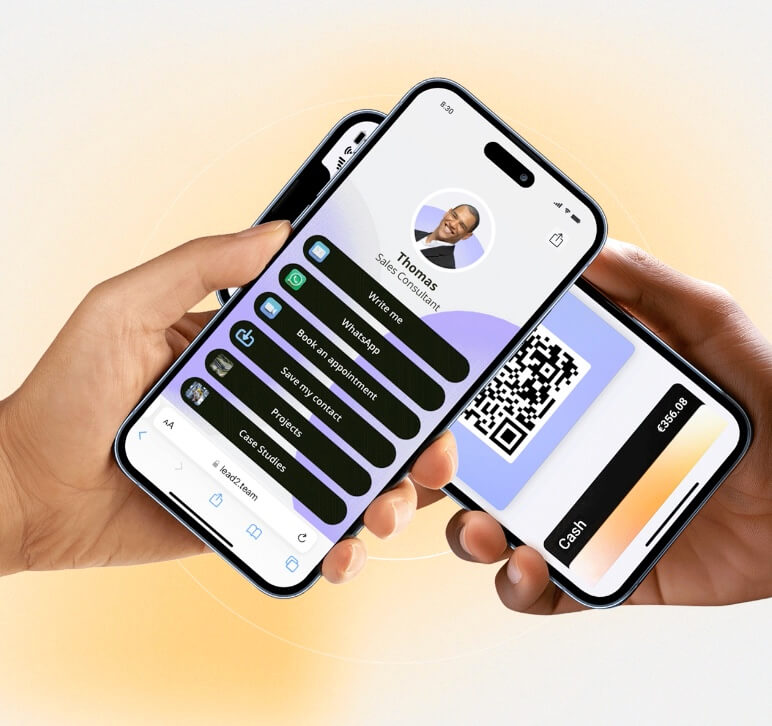
The professional world has changed. Remote work, videoconference meetings, networking on social networks, sustainability as a priority. And professional contact tools need to evolve with it. The digital business card is not a fad: it is the logical answer to how we connect today.
But it's not about demonizing paper. It is about understanding that digital cards give you more. Let's see why.
Why consider switching to digital cards
For decades, the paper card has been the ritual of presentation in any professional meeting. Fulfilling this gesture was almost obligatory. But today we find ourselves in situations that paper cannot solve:
- Virtual meetings. You cannot deliver a physical card for Zoom.
- Subsequent follow-up. Searching through a pile of cards for that person you met two weeks ago is not practical.
- Upgrades. You change positions and hundreds of cards have to be reprinted.
- Sustainability. More and more companies are looking to reduce their environmental footprint.
The digital card solves each of these points. And it has additional advantages that a paper card cannot even offer.
11 reasons to switch from paper to digital cards
1. Always up to date: change your data without reprinting
Did your phone number change, did you get a promotion, did your company move office? With a paper card, that means a new print run. With a digital card, you update the data on the platform and all links, QR and Wallets show new information instantly. No additional cost, no waiting.
2. Always with you: it's on your cell phone
Never again will you arrive at a meeting saying «I left my cards at the office». Your digital card is on your cell phone: as a saved link, in your Apple Wallet or Google Wallet or accessible with a simple QR. Where your phone goes, your card goes.
3. Multiple ways to share: link, QR, Wallet, email
A paper card can only be delivered by hand. A digital card is shared by 7 different channelsPersonalized link, QR code, Wallet, email signature, WhatsApp, social networks and presentations. Each context has its ideal method.
4. Sustainable: goodbye to paper waste.
Paper card production involves paper, ink, transportation and waste. Billions of business cards are printed worldwide every year, and the vast majority end up in the waste garbage can. A digital card eliminates that cycle entirely. If your company has compromises of sustainability or CSR, The switch to digital is a coherent and visible decision.
5. Long-term cost savings
Crunching the numbers is simple. A run of paper cards for a team of 20 people can cost between 200 and 500 euros, and every time someone changes positions or data, you have to reprint. With a digital card platform, the cost is a fixed subscription that includes unlimited updates for the entire team. From the second or third data change, you have already amortized the investment.
6. More information than a paper card
A paper card has space for name, title, phone, email and little else. A digital card can include links to your LinkedIn profile, a corporate video, a PDF catalog, your location on Google Maps, a meeting booking link, etc. and any other resource you need. All accessible at a touch.
7. Works remotely and on-site
This is the advantage that has gained the most weight in recent years. In a video call meeting, you can share your digital card via chat. In a face-to-face event, you can show your QR. In a follow-up email, you can include your link. The paper card only works in one scenario: face-to-face with the card in your hand.
8. The receiver saves your contact instantly
When someone receives your paper card, they have to type your data manually into their address book (if they remember). With a digital card, when you press «Save contact» downloads your information as a vCard directly to your cell phone's address book. Zero transcription errors, zero lost data.
In fact, in the Lead2Team digital card, the first download is done automatically, so that the other person receives your data just by scanning or accessing the card.
9. You don't just share: you also collect data
A paper card is a one-way channel: you give your details and wait for the other person to contact you.
A digital card with Lead2Team works in both directions. It carries a integrated intake form that allows the other person to leave you their contact information directly from your card. In other words, not only do you share your information, but you you pick up the other's no need for apps, notebooks or manual exchanges. Captured contacts are automatically saved in your dashboard and can be exported or sent to your CRM.
10. Metrics: you know who has seen your card.
A paper card disappears in your pocket and you never hear from it again. With a digital card, you have real analyticsHow many people opened your card, which buttons they clicked, how many leads you generated. Platforms like Lead2Team track views, clicks on connectors and completed forms, giving you a clear view of what's working and what's not.
11. Modern professional image
Sharing your card from your mobile wallet or via a QR code conveys an image of innovation and adaptation. It's not about looking modern for the sake of looking modern, but about showing that your company uses current and efficient tools. In sectors where first impressions count (and in which they don't), that makes a difference.
Comparison chart: digital vs. paper card
| Criteria | Digital card | Paper card |
|---|---|---|
| Cost per upgrade | 0 euros (published online) | New print run |
| Data update | Instant, free of charge | Requires reprinting |
| Ways to share | Link, QR, Wallet, email, networks, WhatsApp | Only in hand |
| Sustainability | No paper, no waste | Paper, ink, transportation |
| Information included | Unlimited (links, videos, PDFs, networks) | Limited to physical space |
| Data collection | Integrated form to collect data from the other party | No (you only deliver your own) |
| Usage metrics | Views, clicks, leads generated | None |
| Remote operation | Yes (chat, email, networks) | No |
| Save contact | One touch (vCard download) | Manual (enter data) |
| Always available | In the mobile (Wallet) | Only if you have it on you |
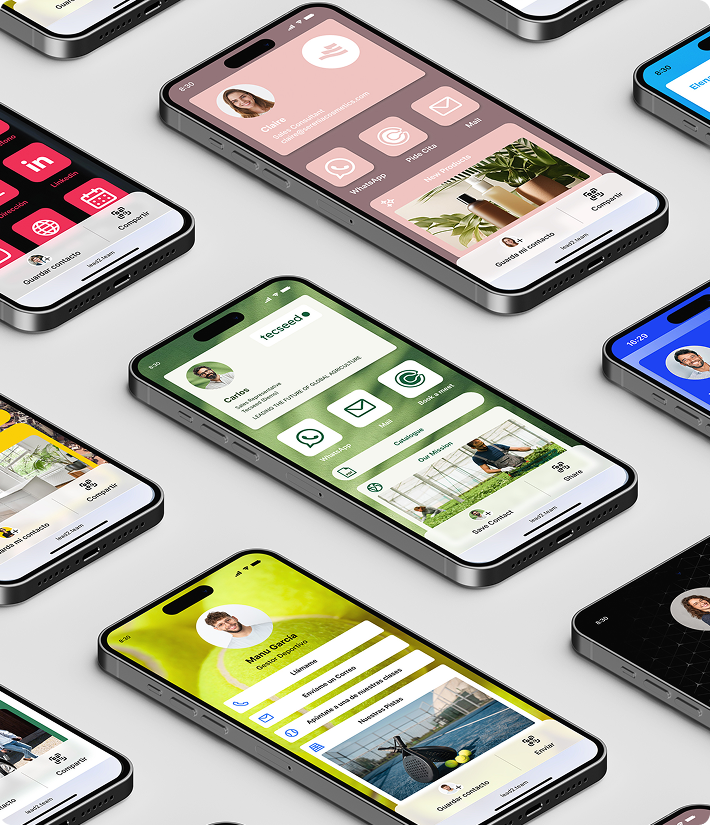
| Customization by equipment | Different designs per department | One design per run |
Can both be used? Combined strategy
If your industry or business culture highly values the gesture of handing out a physical card, you don't have to choose. Many companies opt for a combined approachKeep a paper card with a minimalist design that includes a QR code linked to your digital profile.
So, in a face-to-face meeting, you hand over the physical card (which satisfies the social ritual) and at the same time offer a QR that gives access to all your updated digital information. If the paper card is lost, the contact is already stored digitally.
Another option is the NFC cardsphysical cards with a chip that automatically open your digital profile when you bring them close to a cell phone. They combine the tangibility of paper with the power of digital, without ever needing to reprint.
But if you're looking for pure efficiency, the digital card works perfectly well on its own.
How to make the transition: from paper to digital in 5 minutes
Making the leap doesn't require a technology project. With platforms like Lead2Team, the process is that simple:
- Create your digital profile with your basic contact information (name, title, email, phone number).
- Personalize your card adding connectors: LinkedIn, web, catalog, video, WhatsApp or whatever you need.
- Configure the design with your company colors and logo.
- Share your card by the channel of your choice: link, QR, Wallet or email signature.
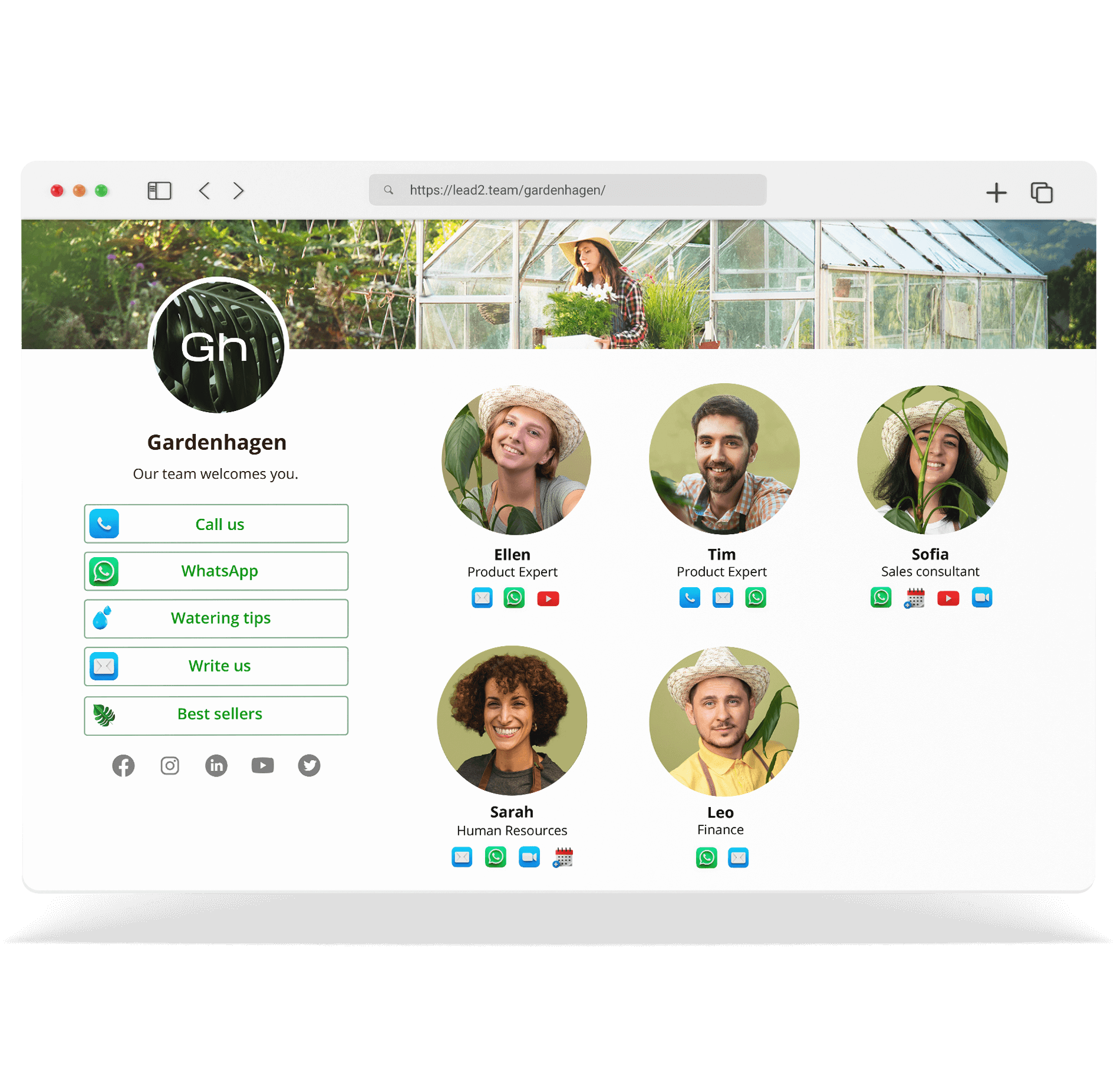
If you want a detailed tutorial, we have a step-by-step guide to create your digital business card. And if you manage a team, Lead2Team allows you to create and manage all cards from a single panel with its free Team Manager.
For a complete overview of the topic, please see our complete guide to digital business cards.
Frequently Asked Questions
Is a digital or paper business card better?
It depends on the context, but in terms of functionality, the digital card offers clear advantages: it can be updated at no cost, shared across multiple channels, includes more information and generates usage metrics. The paper card still has value in sectors where the physical gesture is important, but it can be complemented with a digital QR.
How much do I save if I switch to digital cards?
Savings depend on the size of your team and the frequency of updates. A team of 20 people reprinting cards twice a year can spend between 400 and 1,000 euros on printing alone. With a digital platform, the cost is a fixed subscription that includes unlimited changes.
Can I use digital and paper cards at the same time?
Yes, and it is a very common strategy. You can keep a paper card with a printed QR linking to your digital profile. This way you combine the tangibility of the paper with the power of the digital card. You can also opt for NFC cards that combine the physical and digital in one medium.
Are digital cards taken seriously?
More and more. In sectors such as technology, consulting, real estate and startups, digital cards are already the standard. What conveys professionalism is the quality of your card and the ease with which you share your information, not the medium itself. A well-designed digital card with the colors and logo of your company is equally or more professional than a paper one.
What percentage of paper cards are thrown away?
According to industry data, approximately 88 % of paper business cards are discarded in less than a week. This reflects the inefficiency of the format: too many are given out, but too few are kept. With a digital card, the contact is stored directly in the recipient's address book.
Are digital cards more sustainable?
Yes, significantly. They eliminate the need for paper, ink and transportation associated with printing. A single digital card replaces hundreds of paper cards over its lifetime and can be upgraded an infinite number of times without generating any waste.